Technology has changed the way people communicate, work, shop, and manage personal information. At the same time, many disputes and incidents now involve digital platforms, online accounts, social media, emails, websites, and electronic records.
When a situation involves digital information, a traditional investigation may not always provide the complete picture. Cyber investigation in Mumbai can help examine relevant digital evidence and organize information that may be useful for understanding an incident.
Professional investigators can work with available and lawfully obtained information to identify patterns, document findings, and prepare investigation reports. This article explains the basics of cyber investigation, common situations where it may be relevant, types of digital evidence, and important privacy considerations.
What Is Cyber Investigation?
Cyber investigation is the process of examining digital information related to a particular incident, dispute, or investigation.
Depending on the circumstances, an investigation may involve publicly available information, electronic records, online activity, digital communications, or other information that can be legally accessed.
The purpose is not simply to collect large amounts of data. A professional investigation focuses on identifying relevant information, establishing a timeline, and documenting findings in a structured manner.
Cyber investigation may be relevant to individuals, families, businesses, and organizations dealing with digital-related concerns.
Why Cyber Investigation Matters in Mumbai
Mumbai is a major business and technology hub where individuals and companies regularly depend on digital communication and online services.
Emails, websites, social media accounts, messaging platforms, online transactions, and cloud-based systems are now part of everyday activities. Consequently, digital information can sometimes become important when an unusual incident or dispute occurs.
A structured investigation can help organize available information and identify details that may otherwise be difficult to connect.
For businesses, digital investigation can also support internal inquiries involving suspicious online activity, impersonation, information misuse, or other technology-related concerns.
Common Situations That May Require Digital Investigation
Cyber investigation can cover different types of situations. The exact approach depends on the circumstances and the information that can legally be obtained.
Some examples include:
- Online impersonation
- Digital identity concerns
- Suspected online fraud
- Suspicious website activity
- Social media-related disputes
- Online harassment concerns
- Business-related digital disputes
- Misuse of publicly available information
- Suspicious electronic communications
- Digital information connected to an ongoing investigation
Not every online problem requires a private investigation. In some cases, the appropriate response may involve contacting a platform, bank, lawyer, cybersecurity professional, or law-enforcement agency.
Types of Digital Evidence Investigators May Examine
Digital evidence can exist in many forms. The relevance of a particular source depends on the case.
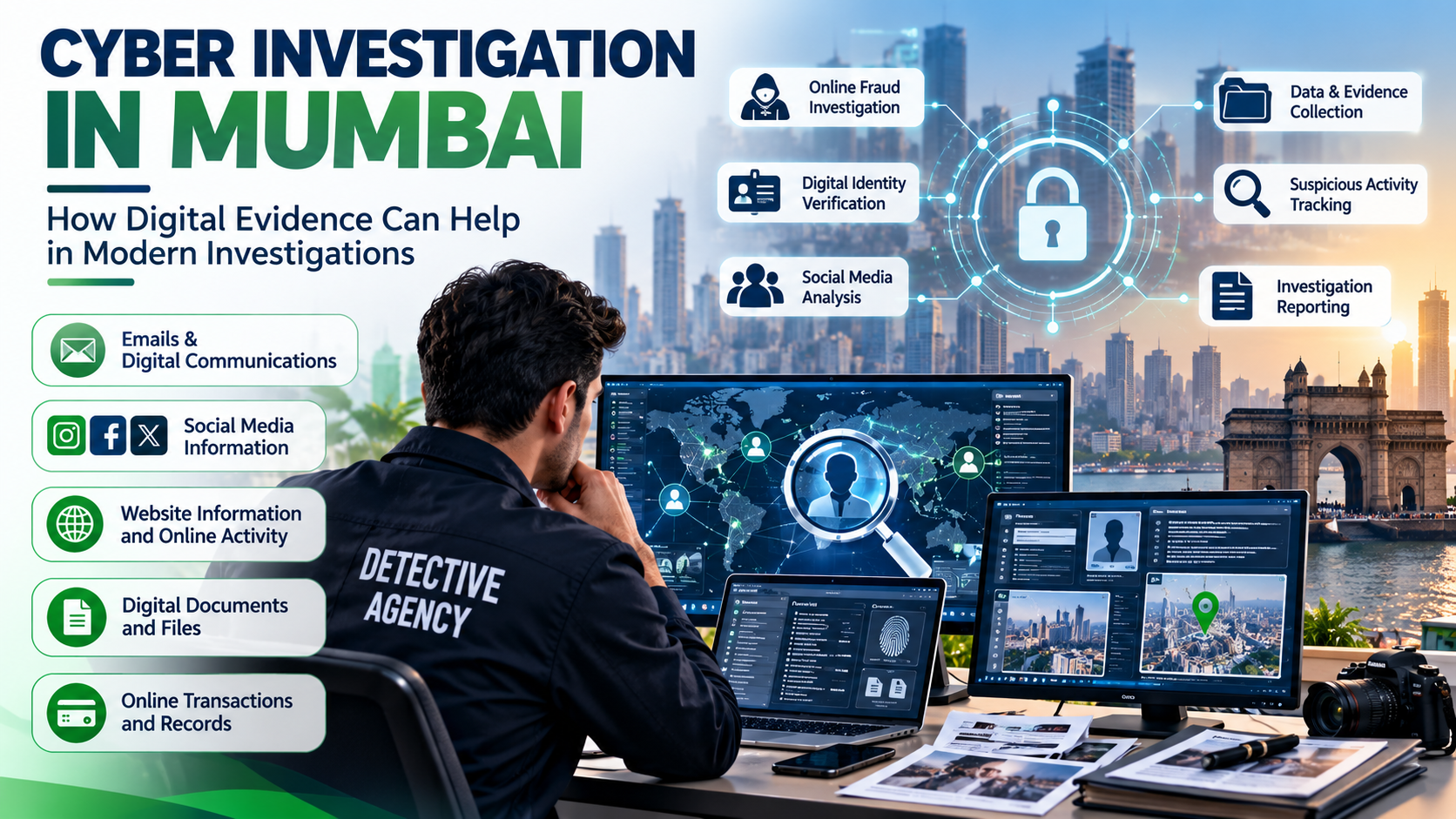
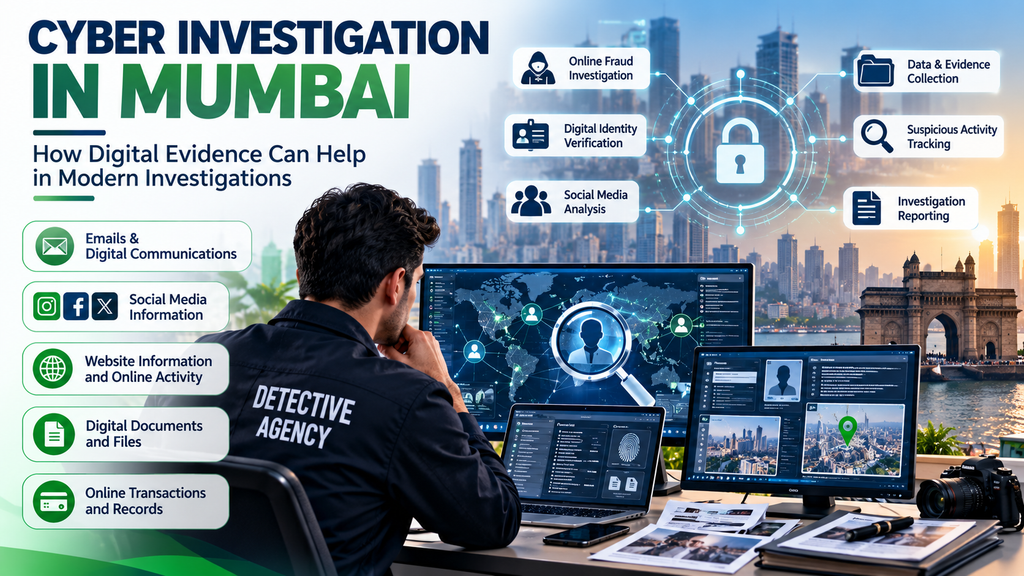
Potentially relevant information may include:
Emails and Electronic Communications
Emails can provide dates, sender information, message content, and communication history. When lawfully available, such information can help establish a timeline.
Social Media Information
Publicly accessible social media information may provide useful context about an account, profile, post, or online interaction.
Investigators should distinguish between information that is publicly available and private information that requires proper authorization or legal process.
Website Information
Websites can contain information about businesses, services, contact details, public announcements, and other online activity.
Archived or historical information may sometimes help establish how an online presence changed over time.
Digital Documents
Documents, photographs, screenshots, and other electronic files may contain information relevant to an investigation.
Their authenticity and context should be considered before drawing conclusions from them.
Online Transaction Information
Transaction-related information can sometimes help establish a sequence of events in cases involving suspected online fraud or financial disputes.
However, sensitive financial records should only be accessed and handled through appropriate legal and authorized channels.
How a Cyber Investigation Usually Works
A professional digital investigation generally begins by understanding the issue and defining the investigation’s scope.
1. Initial Consultation
The investigator first discusses the situation with the client and identifies the key questions that need to be addressed.
This stage helps determine what information is relevant and what investigative methods may be appropriate.
2. Defining the Investigation Scope
The investigation should have a clear purpose. For example, the objective could be to understand an online impersonation incident, document publicly available information, or establish a timeline of digital events.
A defined scope helps prevent unnecessary collection of unrelated information.
3. Information Collection
Relevant information is collected through lawful and appropriate methods.
Depending on the case, this may include publicly available online information or records provided by the client.
4. Information Analysis
Collected information is reviewed to identify connections, inconsistencies, dates, patterns, or other relevant details.
The investigator should separate verified information from assumptions.
5. Documentation
Important findings can be organized into notes, timelines, screenshots, records, or a formal investigation report, depending on the case.
6. Final Findings
The final report should explain the information identified during the investigation and clearly distinguish documented findings from information that could not be verified.
Online Fraud and Digital Identity Issues
Online fraud can involve fake profiles, impersonation, misleading websites, suspicious communications, or other digital activity.
Identity-related cases can be particularly difficult because online information may be incomplete or misleading.
A cyber investigation may help organize publicly available information and document relevant digital activity. However, investigators should not assume that an online profile automatically proves the real identity of the person operating it.
Verification requires appropriate evidence and, where necessary, cooperation from relevant platforms or authorities.
Social Media and Publicly Available Information
Social media can provide valuable information during some investigations, but it must be handled carefully.
Public posts, profiles, business pages, photographs, and other openly accessible information may help establish context or timelines.
However, accessing private accounts without authorization is not an appropriate investigative method.
A responsible investigator should work within applicable privacy laws and platform rules while documenting information that can legitimately be examined.
Preserving Digital Evidence Properly
Digital information can change quickly. A social media post may be edited, an account may disappear, or a website may be updated.
When potentially relevant information is identified, preserving it appropriately can become important.
Useful practices may include:
- Recording the date and time of observation
- Keeping original files where appropriate
- Maintaining relevant screenshots
- Recording source information
- Avoiding unnecessary modification of evidence
- Maintaining a clear evidence timeline
For matters that may become legal disputes, professional legal advice can help determine the appropriate method for preserving and presenting evidence.
Privacy and Legal Considerations
Privacy is an important part of any digital investigation.
An investigator should not obtain private information through unauthorized access, hacking, password theft, or other unlawful methods.
Professional investigations should respect applicable laws, privacy requirements, platform policies, and the rights of individuals involved.
Clients should also understand that a private investigator cannot legally guarantee access to confidential information simply because it may be relevant to a case.
When an investigation has potential legal consequences, consulting a qualified lawyer can help clarify what information can be collected and how it may be used.
When Should You Consider Professional Assistance?
Professional assistance may be useful when a digital issue is complicated, involves multiple sources of information, or requires systematic documentation.
For example, a person may need help organizing information related to an online impersonation issue, while a business may need assistance documenting suspicious digital activity.
Before starting an investigation, it is useful to clearly identify the problem and collect any information that is already available.
Professional investigators can then assess the situation and explain what investigative services may be appropriate.
How to Prepare Before a Cyber Investigation
Clients can make an investigation more efficient by preparing relevant information in advance.
Depending on the situation, this may include:
- Screenshots of relevant communications
- Website addresses
- Public social media profile links
- Email records
- Dates and times of important events
- Transaction references
- Names of relevant organizations
- A written description of what happened
Providing accurate information helps an investigator understand the situation and avoid spending time on unrelated details.
Clients should not attempt to access another person’s private accounts or devices to collect evidence.
Why Professional Documentation Matters
Finding information is only one part of a digital investigation. Organizing that information properly is equally important.
A well-structured report can explain:
- What information was examined
- When it was identified
- Where it came from
- What was verified
- What remains uncertain
- How different pieces of information relate to the investigation
Clear documentation makes the findings easier for clients and, where appropriate, legal professionals to understand.
Choosing the Right Approach for a Digital Investigation
Every investigation is different. A social media impersonation case may require a different approach from a business-related digital dispute.
Before hiring an investigator, clients should discuss the objective, expected process, documentation, confidentiality, and legal boundaries.
It is also useful to ask what information the investigator expects from the client and what type of final report will be provided.
A professional approach should focus on lawful information gathering, careful analysis, and transparent reporting rather than promises of accessing information that cannot legally be obtained.
Cyber Investigation in Mumbai: A Professional and Responsible Approach
For individuals and businesses looking for cyber investigation in Mumbai, the most important consideration is a structured and lawful investigation process.
Digital information can be useful, but it should always be evaluated in context. A screenshot, social media profile, email, or website record may provide a clue, but one piece of information does not necessarily establish the complete facts of a case.
Professional investigators can help organize available evidence, examine relevant digital information, and document findings while respecting privacy and legal boundaries.
Conclusion
Digital technology has become an important part of modern investigations. Online profiles, electronic communications, websites, digital documents, and other records can sometimes provide valuable information when investigating a dispute or incident.
Cyber investigation in Mumbai can help individuals and businesses approach digital-related concerns in a structured way. From defining the investigation scope to collecting lawful information, analyzing evidence, and preparing documentation, each stage plays an important role.
The most responsible approach is to focus on verified information, respect privacy, and use lawful investigative methods. When a matter may involve legal proceedings, professional legal advice can also help determine how digital evidence should be preserved and used.