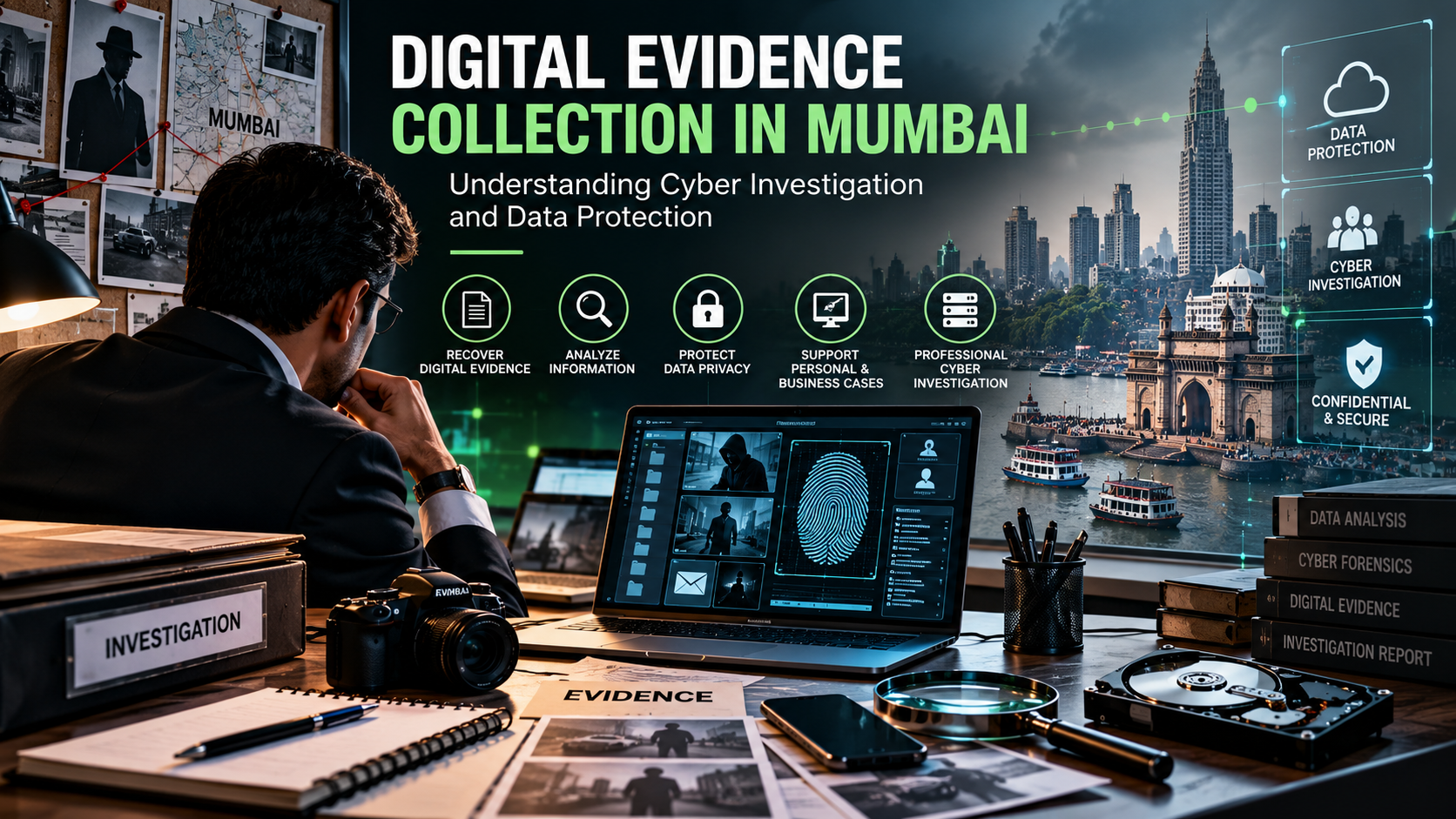
Digital technology has become an important part of personal communication, business operations, and everyday activities. Smartphones, computers, emails, and online accounts can contain information that helps people understand events, resolve disputes, or investigate suspected digital incidents.
When a personal or business matter involves electronic information, digital evidence collection in Mumbai can be an important part of an investigation. However, collecting digital evidence requires careful handling, attention to privacy, and an understanding of applicable legal procedures.
Digital evidence may be useful in situations involving suspected online fraud, business disputes, unauthorized access, or other concerns. Its usefulness depends on how the information was obtained, preserved, verified, and presented.
This guide explains the fundamentals of digital evidence, responsible collection practices, data protection, and factors to consider when seeking professional investigation assistance in Mumbai.
Important: This article provides general educational information and is not legal advice. Evidence handling and admissibility depend on the circumstances of each case. Consult a qualified legal professional for advice about a specific matter.
1. What Is Digital Evidence?
Digital evidence is information stored or transmitted in electronic form that may be relevant to an investigation or legal matter.
It can exist on computers, smartphones, cloud services, email accounts, and other digital systems.
Examples include:
- Emails and business communications
- Documents and digital files
- Photographs and videos
- System logs
- Relevant transaction records
- Website activity records
- Messages obtained through lawful access
- Metadata associated with electronic files
Not every digital file is automatically reliable or legally admissible. Its relevance, authenticity, integrity, and method of collection may need to be evaluated.
India’s Bharatiya Sakshya Adhiniyam, 2023 contains provisions addressing electronic and digital records, including requirements related to admissibility.
2. Why Digital Evidence Collection Matters in Mumbai
Mumbai is a major business and technology centre where individuals and organizations use digital systems for communication, transactions, and recordkeeping.
When a dispute or suspected cyber incident occurs, relevant digital information may help establish a timeline or clarify what happened.
For example, a business may need to investigate:
- Suspected misuse of company information
- Unauthorized access to an account
- Online impersonation
- Disputed digital communications
- Suspected data leakage
- Fraud-related digital records
The appropriate investigative approach depends on the circumstances. A private investigation agency should not assume that every digital concern requires the same collection method.
Digital evidence should be obtained through lawful and appropriately authorized methods.
3. Common Types of Digital Evidence
Digital evidence can take many forms. Identifying the type of information involved is an important initial step.
3.1 Emails and Electronic Communications
Emails may contain timestamps, sender and recipient information, attachments, and message content.
In a business dispute, relevant emails may help establish communication history or document a sequence of events.
Users should preserve original messages where possible rather than relying only on screenshots.
3.2 Digital Documents
Business documents, reports, contracts, and other electronic files may contain useful information.
Relevant details can include:
- File creation information
- Modification history
- Document contents
- Version information
- Source and storage location
File metadata can sometimes be altered or lost, so it should not automatically be treated as conclusive proof.
3.3 Photographs and Videos
Photographs and videos may provide information about an event, location, or activity.
When reviewing such material, investigators may consider the source, context, timestamps, and whether the file has been altered.
A photograph alone may not establish the full circumstances surrounding an event.
3.4 System and Access Logs
Digital systems may record activity such as login attempts, access events, or changes to files.
These records can be useful when examining suspected unauthorized access or operational incidents.
The reliability of a log depends on how it was generated, stored, and maintained.
3.5 Financial and Transaction Records
Electronic transaction records may be relevant to certain financial disputes or suspected fraud cases.
Users should obtain financial information through authorized channels and avoid accessing another person’s private financial accounts without permission.
4. How Digital Evidence Collection Works
Digital evidence collection is not simply the process of taking screenshots or copying files. A careful process aims to preserve relevant information while minimizing the risk of alteration or loss.
The exact procedure depends on the device, investigation, legal requirements, and available authorization.
Step 1: Identify the Investigation Objective
The first step is to understand what issue needs to be examined.
For example:
- Is the concern related to unauthorized access?
- Is there a suspected online fraud incident?
- Does a business need to review a data security event?
- Is a digital communication relevant to a dispute?
A clearly defined objective helps prevent unnecessary collection of personal information.
Step 2: Identify Relevant Information
The investigator or authorized technical professional determines which systems or records may contain relevant information.
This could include a particular business account, email record, device, or authorized system log.
Collection should be limited to information relevant to the legitimate purpose whenever possible.
Step 3: Preserve Available Records
Relevant information should be preserved carefully to reduce the risk of accidental deletion or modification.
Depending on the case, preservation may involve:
- Maintaining original files
- Recording relevant file details
- Documenting the source
- Restricting unnecessary access
- Using appropriate forensic procedures
A qualified digital forensic professional may be needed when the evidence requires technical examination.
Step 4: Document the Collection Process
Documentation helps establish how information was obtained and handled.
Records may include:
- Date and time of collection
- Source of the information
- Person responsible for collection
- Tools or methods used
- Storage details
- Subsequent handling
A documented process can help investigators explain the history of an item of evidence.
Step 5: Analyze Relevant Information
After collection, authorized professionals may examine the material for information relevant to the investigation.
Analysis should distinguish between confirmed findings, technical indicators, and assumptions.
Not every unusual file or login record proves wrongdoing.
5. Understanding Evidence Integrity
Evidence integrity refers to maintaining confidence that information has not been improperly changed or manipulated.
Digital files can be copied, edited, renamed, or transferred—consequently, the handling process matters.
Why Integrity Is Important
If a digital record is modified without documentation, questions may arise about its reliability.
Useful preservation practices may include:
- Maintaining original evidence where possible
- Recording collection details
- Using suitable forensic tools
- Restricting unauthorized changes
- Maintaining appropriate handling records
Technical methods such as hashing may be used by qualified professionals to help verify whether a file has changed. The appropriate method depends on the type of evidence and the investigation.
Can Screenshots Be Used as Evidence?
Screenshots may provide useful context, but they do not necessarily establish the authenticity or complete history of the information shown.
A screenshot can omit metadata, surrounding communications, or relevant technical details.
Where possible, preserve the source and consult a qualified professional about evidentiary requirements.
6. Legal Considerations for Digital Evidence in India
Digital evidence must be handled with attention to applicable laws and legal procedures.
The Bharatiya Sakshya Adhiniyam, 2023, which came into force on July 1, 2024, includes provisions on electronic and digital records. Section 61 recognizes the legal effect of electronic or digital records subject to the Act’s requirements, while Section 63 addresses admissibility conditions for electronic records.
What This Means for Investigations
The existence of an electronic record does not automatically establish that it will be accepted as proof in every proceeding.
Relevant considerations may include:
- Authenticity
- Integrity
- Source of the record
- Method of collection
- Applicable statutory requirements
- Whether the information was lawfully obtained
The appropriate legal analysis depends on the particular case.
Seek Legal Advice When Necessary
If digital evidence is intended for court proceedings, consult a qualified lawyer who can explain the applicable requirements.
An investigation agency may assist with information gathering or technical work, but legal admissibility is a matter for the appropriate legal process.
7. Data Protection and Privacy
Digital investigations often involve information that may be personal or confidential.
Responsible evidence collection should respect privacy and avoid unnecessary access to unrelated information.
Protect Personal Information
Sensitive information may include:
- Personal messages
- Identity documents
- Financial records
- Passwords
- Health-related information
- Private photographs
- Business confidential information
Only collect information when there is an appropriate lawful basis and legitimate purpose.
Avoid Unauthorized Account Access
Investigators and individuals should not attempt to access private accounts, devices, or communications without proper authorization.
Avoid activities such as:
- Guessing another person’s password
- Installing spyware without lawful authority
- Intercepting private communications
- Accessing accounts without permission
- Copying unrelated confidential data
A professional investigation should operate within applicable legal and ethical boundaries.
8. Digital Evidence in Corporate Investigations
Businesses may need digital evidence when examining internal incidents, suspected data misuse, or disputes involving company systems.
The investigation should be proportionate to the issue and conducted with appropriate organizational authorization.
Examples of Corporate Concerns
A company may need to review:
- Unauthorized access to business accounts
- Suspected leakage of confidential documents
- Suspicious changes to digital records
- Internal communication disputes
- Potential misuse of company resources
Importance of Internal Policies
Businesses should maintain clear policies regarding:
- Employee access
- Data retention
- Device usage
- Information security
- Incident reporting
- Investigation authorization
A clear internal process can help organizations respond consistently when a digital incident is reported.
Protect Employee Privacy
Corporate investigations should avoid collecting unrelated personal information.
Employers should obtain appropriate legal and professional guidance when reviewing employee devices, accounts, or communications.
9. How a Professional Investigation Agency May Help
A qualified investigation agency may assist clients with certain information-gathering or investigative requirements, depending on its expertise and authorization.
Digital investigations can require technical skills that differ from traditional field investigation work.
Potential Areas of Assistance
Depending on the agency’s capabilities, services may include:
- Initial case assessment
- Evidence preservation guidance
- Digital information review
- Documentation support
- Coordination with qualified forensic professionals
- Investigation reporting
Do not assume that every private detective agency offers certified digital forensic services. Verify the actual expertise and scope of work before hiring.
Ask About Professional Capabilities
Before engaging an agency, consider asking:
- Does the agency have relevant digital investigation experience?
- What methods does it use to preserve evidence?
- Does it work with qualified forensic specialists?
- How does it protect confidential information?
- What documentation will be provided?
- What legal limitations apply to the proposed work?
These questions can help clarify expectations.
10. How to Choose a Digital Investigation Service in Mumbai
Selecting an investigation service requires attention to the nature of the case and the professional capabilities being offered.
A suitable service should be assessed based on relevant qualifications, transparency, and lawful working practices.
Consider Relevant Experience
Ask whether the agency has handled cases similar to yours.
For example, a company investigating unauthorized account access may need technical expertise that differs from a personal dispute investigation.
Review the Scope of Work
The agency should explain what it can and cannot do.
Be cautious of claims such as:
- Guaranteed access to private accounts
- Guaranteed evidence against a person
- Guaranteed court acceptance
- Guaranteed recovery of deleted information
- Guaranteed investigation results
No professional can guarantee every investigative outcome.
Discuss Confidentiality
Ask how case information will be stored, shared, and protected.
Written terms can help clarify confidentiality expectations and responsibilities.
Understand Costs
Request a clear explanation of fees and potential additional charges.
Costs may vary according to case complexity, technical requirements, duration, and professional involvement.
11. Digital Evidence Preservation: Common Mistakes to Avoid
Incorrect handling can reduce the usefulness of digital information or create additional privacy risks.
Mistake 1: Editing Original Files
Editing a file before preserving the original can make it more difficult to establish its history.
Maintain original records where possible.
Mistake 2: Relying Only on Screenshots
Screenshots may omit important context or technical information.
Preserve relevant original records when lawfully available.
Mistake 3: Sharing Sensitive Evidence Publicly
Publishing private messages, identity documents, or confidential files online can create privacy and security risks.
Share information only with appropriate authorized parties.
Mistake 4: Accessing Another Person’s Account
Unauthorized account access can create legal and privacy concerns.
Do not attempt to access private accounts without proper permission or lawful authority.
Mistake 5: Assuming Every Digital Record Is Genuine
Digital information may be incomplete, inaccurate, or altered.
Review the source and relevant context before concluding.
12. What to Do If You Suspect a Cyber Incident
If you believe that your account, device, or business system has been compromised, take practical steps to protect your information.
Immediate Steps
- Secure your account using official recovery procedures.
- Change compromised passwords where appropriate.
- Enable additional security features if available.
- Preserve relevant notifications and records.
- Avoid deleting potentially relevant information unnecessarily.
- Contact the appropriate service provider or authorities.
- Seek qualified technical or legal advice when needed.
The correct response depends on the type and severity of the incident.
For suspected cybercrime, consider reporting through India’s official cybercrime reporting resources.
Do not attempt unauthorized counter-access or retaliation against suspected attackers.
13. Frequently Asked Questions
What is digital evidence collection in Mumbai?
Digital evidence collection in Mumbai refers to the lawful gathering and preservation of relevant electronic information for an investigation or other legitimate purpose.
Can a private detective collect digital evidence?
An agency may assist with certain digital investigation activities depending on its expertise, authorization, and applicable laws. Verify the agency’s actual technical capabilities.
Are screenshots enough for legal proceedings?
Not necessarily. The evidentiary value of a screenshot depends on its authenticity, context, collection method, and applicable legal requirements.
Can deleted digital files always be recovered?
No. Recovery depends on the device, storage system, overwriting, encryption, and other technical factors. Successful recovery cannot be guaranteed.
Is digital evidence automatically accepted in court?
No. Electronic records are subject to applicable legal requirements, including provisions under the Bharatiya Sakshya Adhiniyam, 2023.
How can I protect my personal information during an investigation?
Share information only with appropriately authorized professionals, clarify confidentiality arrangements, and avoid providing unnecessary sensitive data.
When should I contact a lawyer?
Consider legal advice when evidence may be used in court, when privacy rights are involved, or when the investigation concerns potential legal violations.
14. Final Checklist for Digital Evidence Collection
Before beginning an investigation, review the following checklist:
- Define the investigation objective.
- Identify relevant digital records.
- Obtain appropriate authorization.
- Preserve original information where possible.
- Document collection and handling.
- Protect confidential data.
- Avoid unauthorized access.
- Consult qualified forensic professionals when necessary.
- Seek legal advice for court-related matters.
- Maintain clear investigation records.
This checklist is a general starting point and does not replace professional legal or technical guidance.
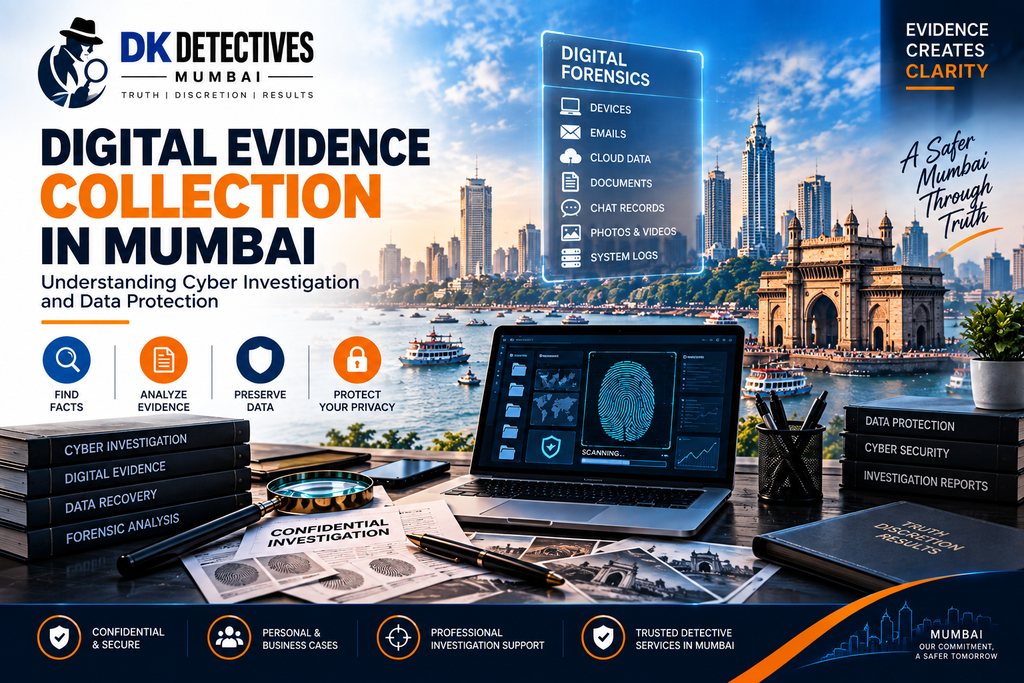
Conclusion
Digital evidence collection in Mumbai can play a role in understanding personal, business, and cyber-related concerns. Electronic records may provide useful information, but their reliability depends on proper preservation, verification, and lawful handling.
A responsible investigation should prioritize privacy, evidence integrity, and transparency. Whether the matter involves a business dispute, suspected cyber incident, or another legitimate concern, choosing appropriately qualified professionals can help clarify the available options.
Before hiring a detective agency, review its experience, scope of services, confidentiality practices, and technical capabilities. When legal proceedings are involved, seek advice from a qualified legal professional.
For professional investigation assistance in Mumbai, research the available services carefully and select an approach that respects legal requirements and personal privacy.